Austria 2011: Great Easter Meals, Exploring Austrian Castles & an Excursion to Hungary

By admin | August 25, 2011

After 2 amazing weeks in Spain I had finally reached my home country, Austria. On Easter Monday, April 25, 2011 my brother and sister-in-law took me on a morning walk of my home town of Weiz, a small town in the eastern part of Austrian province of Styria. One of the main attractions in this town is the Taborkirche, a stout Romanesque church that was mentioned in historical records as early as 1188. Even more impressive is the Church of Our Lady (Marienkirche) on the hill that overlooks the city: the current church, built between 1757 and 1758, is a late Baroque masterpiece and an official pilgrimage church. The town also has some Renaissance monuments: the Castle of Thannhausen was built around 1550 AD and its arcaded courtyard frequently hosts concerts and special events.

The main square of my home town

The main square of my home town

Having enjoyed the phenomenal cooking of my brother, a trained chef, we were joined in the afternoon by my sister-in-law’s family for an excursion to Lake Stubenberg, an artificial lake about 40 minutes east of Weiz. This man-made body of water has become an important recreational destination – it offers boat and bicycle rentals, beach volleyball, a surfing school, several children’s playgrounds and various gastronomic establishments. We walked around the entire lake and enjoyed an ice cream while the clouds were getting darker.

Walking around the Stubenbergsee

Just as the heavens unleashed their wet cargo, we hopped into our cars and drove back home for a nice Easter meal: a traditional Austrian Easter meal often consists of a platter with different types of sliced smoked meat (delicious!) covered with grated horseradish, hard-boiled eggs, cheeses, and sweet Easter bread. After 25 years in Canada, my taste buds still experience delight when exposed to traditional Austrian food.In the evening, after the rain had finished, a phenomenal rainbow adorned the sky above the town.

Rainbow over my home town

Rainbow over my home town

The next day I visited my good friends Andrea and Herbert in my home town. They ended up driving with me to the mountain village of Birkfeld where I got to meet Herbert’s family who all live in a mountain farm that has been there for centuries. Birkfeld itself is a small town with about 1600 people that is nestled into the mountains of Eastern Styria. The surrounding area is a mecca for hikers, bicyclists and skiers and a popular destination for urban dwellers from Vienna and even tourists from northern Germany. We took a scenic walk that gave us great views over Eastern Styria towards the picturesque Mürz Valley. We capped off a lovely day with a nice chat and another delicious traditional Easter platter.

A traditional Austrian Easter platter

A traditional Austrian Easter platter

On April 27, 2011 there was not going to be any sightseeing – instead I had to work, teaching a seminar about Canadian Cultural Studies at the Pedagogic University of Graz. The university offers continuing education courses for high school teachers throughout the province, and English teachers are offered seminars about the United Kingdom, the United States, Australia and other English speaking countries. 2011 was the first year that Canada was included in the curriculum and I felt proud to have been invited as the expert speaker on Canada’s culture. I had prepared for weeks for this seminar and was extremely nervous leading up to it, but in the end it seemed to have gone well, the audience appreciated the information and I was glad that the official teaching part of my European stay was over.

Horses at Bernstein Castle

Horses at Bernstein Castle

April 28, 2011 was my last day in Austria, and my brother, my sister-in-law and I went on an excursion to the Austrian province of Burgenland. Literally translated, Burgenland means “castle country”, and for good reason: this region has a wealth of historic castles and fortresses. We started our visit with the Castle of Bernstein, which today houses an upscale hotel. As this is private property, access is only feasible for hotel guests. But we were able to visit the castle’s gardens, and in town we also visited a store that sells the famous green-coloured serpentine stone that can be found locally.

A perennial favourite: Lockenhaus Castle

A perennial favourite: Lockenhaus Castle

Then we continued on to Burg Lockenhaus, an impressive fortress that was built around 1200 AD. The thick stone walls of this Romanesque and Gothic structure are home to a medieval museum that also includes a torture chamber. Burg Lockenhaus is also home to various birds of prey and to about 1200 bats. A castle tavern is located in one of the two courtyards and makes for a popular tourist destination. This hefty fortress hosts many cultural events, conferences, meetings and medieval re-enactments.

The beautiful church of Köszeg in Hungary

The beautiful church of Köszeg in Hungary

Continuing our drive through the low-lying hills of Burgenland we approached the national border and drove across to neighbouring Hungary. Travelling inside the European Union still amazes me every time I cross a border – we did not even have to stop at the border or show any kind of documents, we just drove right into another country. What a contrast to the meticulous and cumbersome border crossing procedures in North America….

The main square of Köszeg

The main square of Köszeg

Just minutes from the border we stopped in a pretty Hungarian town called Köszeg, originally the only free royal town in the historical county of Vas (Eisenburg). The town was founded around 1280 and has a number of interesting monuments: the Jurisics Castle and the castle museum, Sacred Heart Church, a Pharmacy Museum, and the town centre with its medieval atmosphere. Since the fall of Communism the town has been nicely renovated and become a local tourist destination for Hungarians and Austrians alike.

The location of the Rechnitz massacre

The location of the Rechnitz massacre

After this quick excursion into Hungary, we returned to Austria via the village of Rechnitz which was also the site of a massacre against 200 Jewish slave labourers at the end of WWII. I had never heard about this massacre, which involved local notables shooting the defenceless labourers after a party at the local castle. The incident was covered up after the war, and the unassuming cross-shaped farm house where this fateful incident took place, is only reachable by crossing a large farmer’s field. From the road I could not see any street signs pointing to this location, however, the Jewish community of Zalaegerszeg in Hungary had put up a black stone memorial sign to the victims of this tragedy.

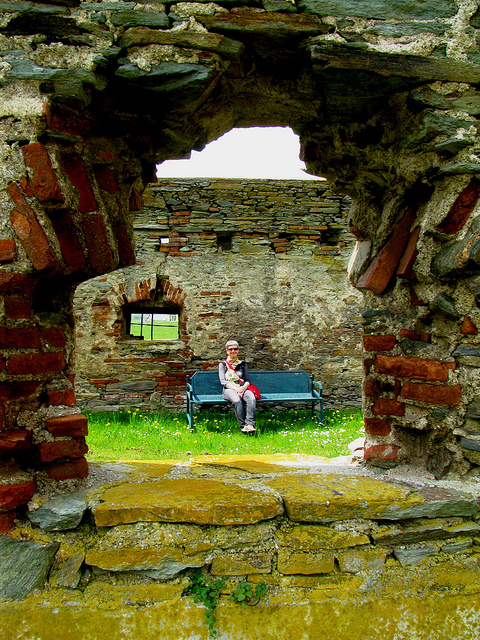
Burg Schlaining - location of the European Peace Museum

Burg Schlaining - location of the European Peace Museum

As a counterpoint to this horrific part of history we visited Burg Schlaining, a 13th century fortress that is home to the European Museum of Peace. It holds an excellent exhibition on Peace, Conflict, Violence and Environment and often hosts international conferences that focus on peace-building and conflict resolution. The exhibition on peace and conflict is housed on two floors of the castle and is extremely informative.  After a visit to the museum I also climbed up the tower of the castle and enjoyed an impressive 360 degree view of the surrounding landscapes.

One of the exhibits inside the Peace Museum

One of the exhibits inside the Peace Museum

My brief four days in Austria had come to an end, and my European trip 2011 was rapidly nearing its conclusion. The next morning I would board a plane to fly to Berlin, to spend five more days in the German capital, soaking up history, monuments and culture in one of Europe’s most vibrant cities. One of the most exciting chapters of my European journey was yet to come…

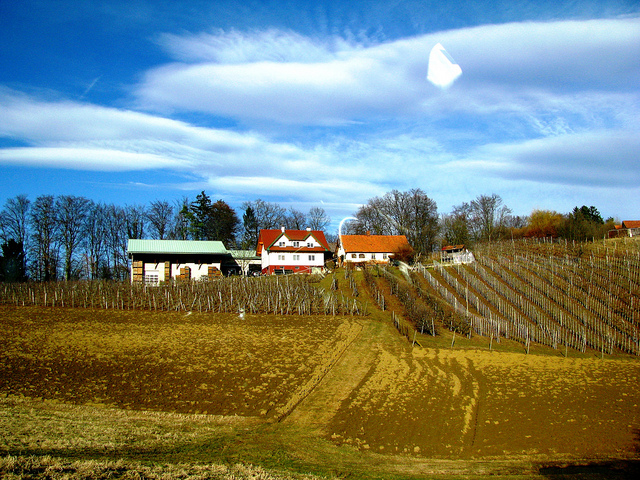
Signs of spring in Austria

Signs of spring in Austria

Related Articles:

Europe 2011: Andalusia Travel – Granada & the Alhambra
Europe 2011: Andalusia Travel – Costa de la Luz, Cadiz & the Pueblos Blancos
Europe 2011: Andalusia Travel – the Wonders of Seville
Europe 2011: Andalusia Travel – Cordoba and the Mezquita
Europe 2011: Austria Travel – Four Days in my Home Country
Europe 2011: Reflections on Berlin

One Response to “Austria 2011: Great Easter Meals, Exploring Austrian Castles & an Excursion to Hungary”

  1. Deejay Says:
    November 16th, 2011 at 11:08 pm

    So ecxteid I found this article – enjoyed reading it…

Comments